Manchester teams do not need another marketing site. They need a product several kinds of people can actually use, without five logins and a rewrite in year two.
What a product platform actually is
A website is a page. A marketplace template is a listing grid. A product platform is the shared object model underneath: users, businesses, events, bookings, reviews, and payments that stay consistent as you add a category. When those pieces are separate products, you get five tools and no trust graph. When they share one model, discovery can grow into operations without a rebuild.
Why Manchester teams hit this wall
Greater Manchester is full of operators who outgrew a brochure: hospitality groups, service businesses, community organisers, and founders around Spinningfields and MediaCity. The search is not “web design Manchester”. It is a product customers, operators, and admins can all use without forking the data. That is the work I take on.
Actors and permissions are the product
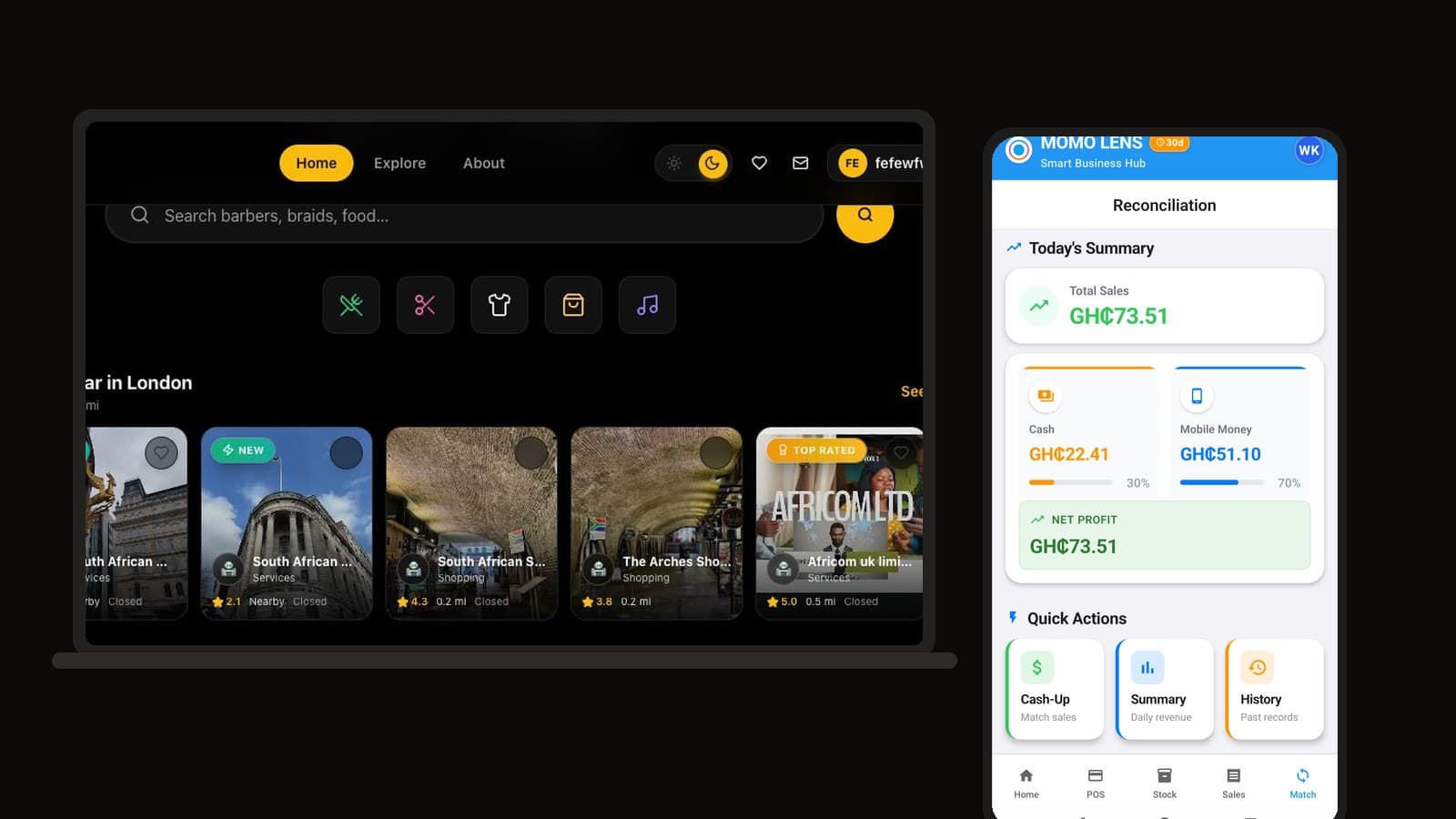
Customers search and book. Businesses claim and manage listings. Providers run a calendar. Admins verify, hide, and package commercial access. If those journeys share one identity and one object model, you can grow. If they do not, you rewrite. Permissions are not an afterthought on a platform. They are the architecture.
Discovery is not five disconnected tools
Search, listings, events, reviews, and bookings look like features. They are engines that categories activate. AfroFind did not ship a new app per vertical. Categories turn engines on. That is the difference between a marketplace MVP and a platform you can still own in two years.
What I actually ship from Manchester
TypeScript, Next.js, and production-minded backends. Shared models, actor journeys, verification, and the boring work that has to exist before scale. I work from Manchester, remotely with UK and Africa-facing teams, and I start from the hard parts, not a theme.